
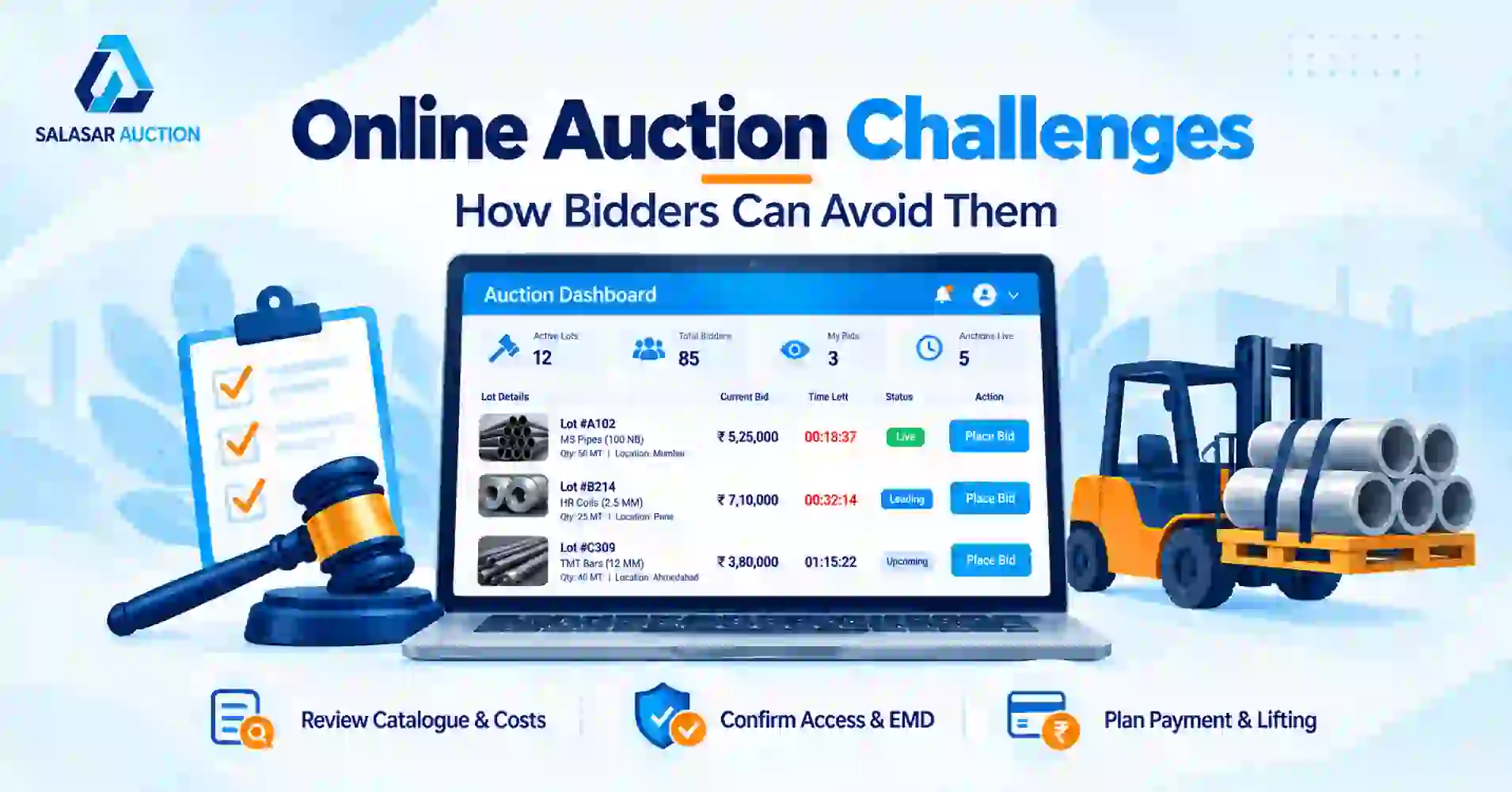
A successful online auction begins with preparation and continues until payment and material collection are complete. Missed notifications, unclear conditions or account-access problems can cause delays, unexpected costs and disputes.
For businesses purchasing industrial scrap, used machinery or surplus materials, understanding these challenges helps improve decision-making. The following five connected steps explain why problems occur and how bidders can avoid them when participating through Salasar Auction.
1. Stay Informed and Track Each Auction Separately
Timely auction intimation, regular reminders and tracking multiple auction IDs give bidders enough time to inspect materials, prepare documents and arrange funds.
Problems arise when contact details are outdated, notifications are overlooked or employees confuse events offering similar materials. Inspection and EMD deadlines may fall before bidding, making an auction-day reminder insufficient.
Keep registered contact details updated and review the auction listings on Salasar Auction. Maintain one tracker covering the auction ID, seller, material, location, lot number, inspection date, EMD deadline and bidding schedule. Assign an employee to monitor changes, save catalogues under the correct auction ID and set separate reminders for each deadline. Always check the latest information before acting.
2. Understand the Catalogue and Calculate the Complete Cost
Reading the auction catalogue, transaction terms and applicable compliance requirements helps prevent disagreements after bidding.
Buyers sometimes rely on photographs or brief descriptions while overlooking material condition, quantity variations, loading responsibilities and collection restrictions. These details affect both suitability and profitability.
Review inspection arrangements, quantity basis, taxes, charges, payment deadlines, lifting conditions and required documents or authorisations. Inspect the material where possible and obtain written clarification on unclear terms.
Bidding according to market prices also means considering the complete acquisition cost. Include loading, dismantling, transport, processing losses and repairs where relevant. A low-priced scrap lot, for example, may contain mixed material that reduces its usable yield. Compare the expected recoverable value with the total cost and establish a maximum bid before the event.
3. Complete Membership and Clarify Account Access Early
Expired membership, pending verification, forgotten passwords or unclear employee responsibilities can cause last-minute access problems. Initiate membership activation or renewal at least 24 hours before the auction, allowing extra verification time, and confirm eligibility.
Test login access and assign an authorised bidding operator. A shared IP address differs from sharing a bidder ID—confirm permitted arrangements with Salasar Auction and avoid shared passwords or unapproved simultaneous logins. Report errors with the auction ID, time and screenshot, without sharing passwords or OTPs. Reporting an issue does not automatically extend the auction.
4. Confirm Interest, Submit EMD and Participate Responsibly
Requesting a catalogue alone does not complete participation. Missing documents, delayed EMD or incorrect payment references can leave eligibility unresolved.
Express interest early, complete documentation and submit EMD before the deadline. Membership and EMD are separate requirements. Verify official payment instructions, retain payment proof and clarify pending acknowledgements before paying again.
Check connectivity, understand bid increments, extensions and closing rules, and monitor your status within the approved budget. The highest bid is not automatically final sale confirmation; follow the event’s acceptance and approval terms.
5. Respond Promptly and Plan Material Lifting
Timely responses regarding payments and material lifting help prevent a successful bid from becoming a delayed transaction.
Delays often occur when buyers arrange funds, vehicles, labour or site permissions only after confirmation. Even after payment, collection may remain blocked if lifting authorisation, documents or collection slots are pending.
After receiving the applicable sale confirmation, verify payment deadlines and coordinate loading or dismantling responsibilities, vehicle requirements and site access. Before dispatching a vehicle, confirm payment acknowledgement, lifting authorisation and the collection schedule.
To avoid material-lifting delays after successful bidding, use the correct auction ID and lot number in correspondence and retain weighment records, gate passes and dispatch documents where applicable. Communicate difficulties before deadlines expire and obtain written guidance. Extensions, additional charges and refund conditions depend on the approved auction terms.
Why Salasar Auction Matters to Business Buyers
Salasar Auction provides a B2B platform for industrial scrap, used machinery, surplus assets and other business auction requirements. Its website offers auction information, registration and login guidance, and support channels for participation-related queries. These resources help buyers prepare before committing funds or placing bid.
How Salasar Auction Supports Better Participation
Bidders can review event information and contact Salasar Auction to clarify eligibility, account access, payment requirements and collection arrangements. Provide the auction ID, lot number and supporting details so the designated team can understand the query accurately.
Prepared bidders also help selling organisations reduce incomplete formalities, repeated queries and avoidable collection delays. Professional auction services work more effectively when clear information is matched by timely action from all participants.
Conclusion
A smoother auction process follows a connected sequence: track opportunities, understand the catalogue, prepare account access, complete participation requirements and organise payment and collection. Following these steps and clarifying uncertainties with Salasar Auction helps bidders reduce avoidable mistakes and make informed commercial decisions.