
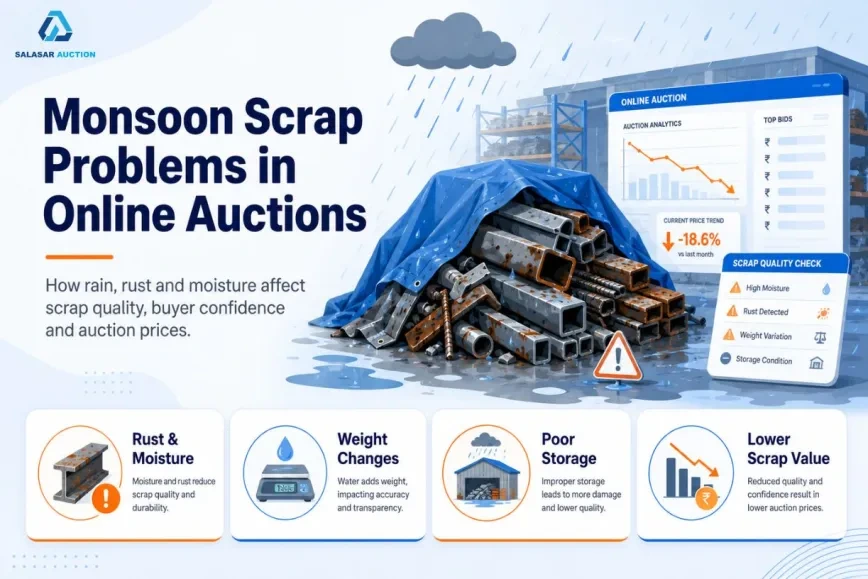
The monsoon season creates several problems for scrap sellers, buyers and bidders. Continuous rain, high humidity, poor storage and waterlogging can damage scrap quality, increase material weight and create uncertainty about the actual condition of an auction lot.
These monsoon scrap selling problems can reduce the final scrap price received by sellers. Buyers may also face extra expenses for drying, cleaning, segregation and transportation. Proper storage, updated photographs, inspection access and transparent auction terms are therefore important for conducting a successful online scrap auction during the rainy season.
1. How Rain Affects Scrap Material
Rust and Corrosion
Iron, steel and other ferrous scrap materials can develop rust when they remain exposed to rainwater and moisture. Light surface rust may not completely damage the material, but heavy corrosion can reduce its thickness, condition and recovery value.
During a metal scrap auction, buyers calculate their bids according to the usable quantity they expect to recover. When corrosion is severe or unclear, bidders may reduce their offers to protect themselves from possible losses.
Moisture and Contamination
Rainwater can become trapped inside pipes, drums, machinery parts, containers, metal sheets and mixed scrap lots. Paper, cardboard, wood and packaging materials may absorb water, while industrial scrap may become mixed with mud, soil, oil and waste.
These conditions increase cleaning and processing costs for buyers. As a result, the additional expense is often deducted from the amount buyers are willing to offer during online bidding.
Changes in Scrap Weight
Wet scraps may weigh more because of trapped rainwater, moisture, and mud. This creates doubts among buyers about whether they are paying for actual scrap material or for additional water weight.
The weight recorded before rainfall may also differ from the weight recorded during loading or delivery. If the auction terms do not clearly explain weighment, moisture deductions and quantity variation, scrap buyers may place lower bids.
2. Poor Storage Can Reduce Scrap Value
Open-Yard Storage Problems
Scrap stored in an open yard is directly exposed to rain. Materials placed on wet ground may become rusty, dirty, and contaminated. Waterlogging can also make physical inspection, segregation and loading difficult.
Even good-quality industrial scrap may receive lower offers when buyers believe that the material has not been stored properly or may require additional handling.
Poor Segregation
Different scrap categories should not be mixed unnecessarily. Ferrous metals, non-ferrous materials, machinery scrap, electrical scrap, plastic waste, and paper scrap should be stored separately.
Proper segregation helps bidders understand the lot composition and calculate a more accurate price. Mixed scrap lots usually create greater uncertainty and may receive conservative bids.
3. Unclear Lot Conditions Create Buyer Doubts
Outdated Photographs
Online bidders often depend on auction photographs to understand the condition of the material. Photographs taken before heavy rainfall may no longer represent the current scrap quality.
If rust, moisture, contamination, or storage conditions are not clearly visible, bidders may doubt the actual condition of the lot. This can reduce participation in online scrap auctions.
Incomplete Material Details
The lot description should clearly mention the material type, approximate quantity, storage location, rain exposure, visible rust, moisture and possible weight variation.
Incomplete descriptions make it difficult for buyers to estimate recovery value and additional costs. Accurate information helps bidders place realistic and confident offers.
4. How Monsoon Conditions Affect Scrap Prices
Scrap prices depend on material grade, purity, quantity, market demand, storage condition and expected recovery value. Clean, dry and properly segregated scrap usually attracts more interested bidders.
Wet, rusty or contaminated material creates additional costs for cleaning, drying, segregation and disposal. Buyers consider these costs before bidding, which may reduce the final auction price.
Protecting scrap quality before listing it on an online scrap auction platform can therefore help sellers achieve better market-based price realization.
5. How Sellers Can Protect Scrap Value
Sell Scrap Before Its Quality Declines
Sellers should avoid storing scrap for too long during the monsoon. Continuous exposure to rain and humidity can increase rust, moisture, contamination and weight variation, gradually reducing the material’s market value. Selling scrap as soon as it becomes available can help preserve its quality, reduce storage and handling costs, and attract better bids through an online auction platform. Listing the material promptly on Salasar Auction can also help sellers reach interested buyers before the scrap condition deteriorates further.
Maintain Proper Storage and Drainage
Scrap should be stored under a covered shed or protected with a waterproof covering. It should be placed on raised platforms, pallets or concrete surfaces instead of directly on wet soil. Proper drainage should also be maintained to prevent water from collecting around the material and causing rust, contamination or loading difficulties.
Provide Clear and Recent Photographs
Sellers should provide updated photographs showing the complete scrap lot from different angles. The images should clearly display the material condition, visible rust, storage area, segregation and any moisture or contamination. Recent photographs help online bidders evaluate the scrap accurately and reduce doubts about the actual lot condition.
Allow Physical Inspection
Whenever possible, sellers should provide buyers and bidders with access to inspect the material before the auction. Physical inspection helps buyers evaluate the scrap grade, moisture level, corrosion, contamination, lot composition and loading conditions. This improves bidder confidence and reduces the possibility of disputes after the auction.
Use Accurate Descriptions and Transparent Terms
The auction description should clearly mention the material type, approximate quantity, storage condition, rain exposure, visible rust and possible weight variation. Auction terms should also explain the weighment method, loading responsibility, inspection process, lifting timeline and quantity tolerance. Accurate information and transparent auction conditions protect both sellers and bidders while supporting fair and competitive online bidding.
6. What Buyers Should Check Before Bidding
Buyers should check whether the photographs are recent, whether the scrap is stored under cover and whether physical inspection is available.
They should also review the visible rust, moisture, material segregation, weighment terms, loading conditions and quantity variation clauses. Cleaning, drying, transportation and processing expenses should be included while deciding the maximum bid amount.
Careful evaluation helps buyers avoid unexpected costs after purchasing the material.
7. Benefits of Choosing Salasar Auction for Scrap Selling
Reach Multiple Interested Bidders
Salasar Auction helps sellers connect with multiple interested scrap buyers and industrial bidders. Instead of depending only on a few local quotations, sellers can present their material to a wider bidder network through a structured online auction process.
Wider participation can increase interest in the scrap lot and improve the possibility of receiving suitable offers.
Encourage Competitive Bidding
When several bidders participate in an industrial scrap auction, they compete by placing better offers for the available material.
Competitive online bidding reduces dependence on individual negotiations and creates a fair environment where the final price is influenced by actual buyer demand.
Improve Market-Based Price Discovery
Salasar Auction helps sellers discover the market value of their scrap through competitive bidding. Buyers place offers according to the material type, quality, quantity, condition and current demand.
This process supports better scrap price discovery compared with relying on a single offline quotation.
Maintain Auction Transparency
Clear lot information, auction terms and bidding procedures help maintain transparency throughout the auction process.
Buyers can review the available details before bidding, while sellers can conduct the sale through an organized and documented process.
Share Lot Information Systematically
Salasar Auction allows sellers to present scrap details, photographs, inspection information and auction conditions systematically. Properly organized lot information helps bidders understand the material and reduces confusion before the auction.
Manage Inspection and Auction Conditions
Physical inspection, weighment conditions, loading responsibilities and lifting timelines can be communicated clearly through the auction process.
This helps sellers manage buyer expectations and allows bidders to participate with greater confidence.
Conclusion
The monsoon can affect scrap material through rust, moisture, weight changes, poor storage and unclear lot conditions. These problems can reduce buyer confidence and lower the final auction price.
Sellers can protect scrap value by maintaining covered storage, proper drainage, clear photographs, inspection access, and accurate descriptions. Transparent auction terms also help buyers and bidders make informed decisions.
Salasar Auction supports businesses in conducting transparent online scrap auctions, reaching interested buyers and improving competitive price discovery during the monsoon season.