
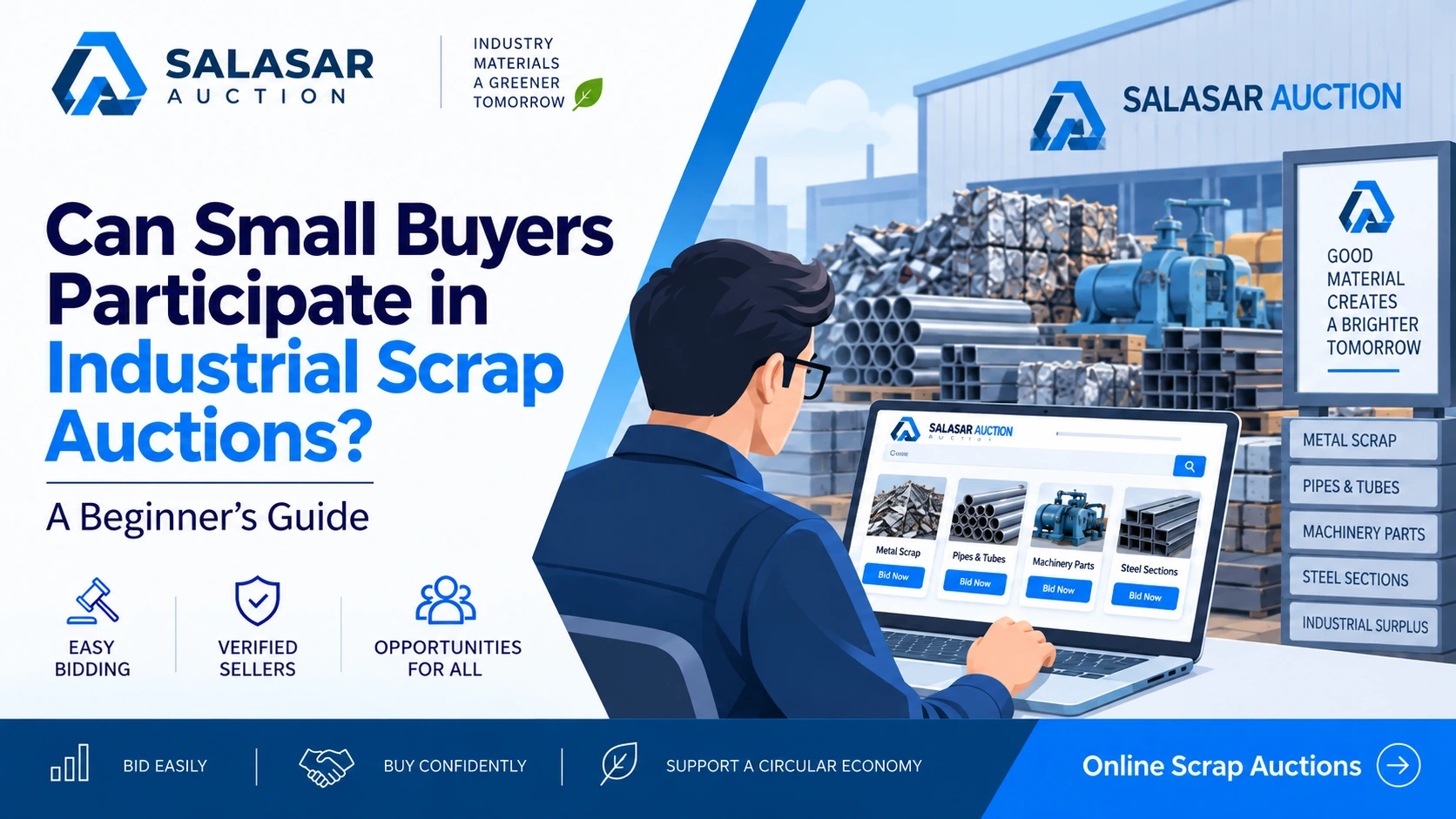
Industrial scrap auctions are not only for large recyclers or big trading companies. Small buyers, local traders, recyclers and growing businesses can also participate in a scrap auction if they choose the right lot and understand the process.
With the growth of online auction platforms, buyers can now discover opportunities, review lot details and participate in online bidding without depending only on local contacts or physical auction events.
The important part is knowing what to check before placing your first bid.
1. Can Small Buyers Really Join a Scrap Auction?
Yes. Small buyers can participate in industrial scrap auctions as long as they meet the eligibility and registration requirements mentioned for the particular auction.
Not every auction contains extremely large quantities. An auction list may include different types and sizes of industrial scrap lots, allowing buyers to select material according to their budget, transportation capacity and business requirements.
Before joining an e auction, buyers should also review the material type and approximate quantity, auction location, EMD (Earnest Money Deposit) or participation deposit, applicable taxes and charges, payment timeline, material pickup or lifting period, and buyer eligibility requirements. Checking these conditions in advance helps avoid unexpected costs or difficulties after winning the auction.
Choosing a manageable lot is much better than bidding on material that may become difficult or expensive to handle later.
2. How Can Small Buyers Find Industrial Scrap Auctions?
Today, buyers can discover opportunities through an auction website instead of searching only through offline dealers.
People commonly search for online auction sites, auction websites in India, bidding websites in India or an online auction in India when looking for suitable opportunities.
However, choosing the right platform is more important than simply finding an auction.
A reliable online auction site should provide clear information about the auction, including material description, quantity, location, inspection details, auction date and time, seller or auction information, and payment terms. Having these details available before bidding helps buyers understand the opportunity clearly and make a more informed decision.
Clear information helps buyers decide whether a particular lot is actually suitable for them before entering the bidding process.
3. Check the Scrap Before You Bid
A low starting price does not always mean a profitable purchase.
Before participating in auction scrap, understand exactly what material is being offered. Check the condition, grade, quantity, photographs and any available inspection details.
Whenever physical inspection is permitted, it can be useful—especially for metal scrap, machinery, mixed industrial material or larger lots.
Small buyers should also calculate the complete cost, including:
Bid Price + Taxes + Loading + Labour + Transportation + Processing Cost
This gives you a much more realistic idea of how much the material will actually cost.
4. Understand Online Bidding Before Your First Auction
The process of bidding online is usually simple, but first-time buyers should understand the rules before the auction begins.
Check the minimum bid increment, auction closing time and whether the platform uses automatic time extensions when bids are placed near closing.
During a bidding auction, prices can move quickly. This is where beginners sometimes make mistakes by increasing their bid simply because another bidder has offered more.
Set your maximum price before the auction begins.
Professional platforms make it easier for bidders online to follow the auction process, but the buyer should still bid according to calculations rather than excitement.
5. Start Small and Learn the Process
For your first industrial scrap auction, there is no need to target the biggest lot.
Start with a quantity that your business can comfortably purchase, transport and store. This gives you an opportunity to understand bidder registration, online bidding, payments and material pickup without taking unnecessary financial risk.
You can gradually participate in larger bid auctions after becoming familiar with the process.
Whether you discover opportunities through online bidding sites in India, an auction site India search or a dedicated industrial auction platform, always compare the auction terms before making a decision.
6. What Happens After You Win?
Winning the auction is only part of the process.
The successful bidder online normally needs to complete payment within the specified period and collect the material according to the seller's lifting schedule.
Before bidding, confirm whether transportation, loading equipment, labour and safety arrangements are the buyer's responsibility.
Planning these costs beforehand helps prevent a profitable-looking bid from becoming expensive after the auction.
7. Why Online Auctions Can Be Useful for Small Buyers
A structured online auction gives small buyers access to industrial material opportunities that may otherwise be difficult to discover.
Instead of depending entirely on traditional sourcing channels, buyers can review current and upcoming auctions, compare lots and participate digitally.
A transparent platform can make the process easier by bringing auction information, bidder registration, bidding and post-auction instructions into one place.
For businesses exploring industrial scrap opportunities, Salasar Auction provides a structured way to discover relevant auctions and participate through an online bidding process.
Conclusion
Small buyers can successfully participate in industrial scrap auctions by starting with manageable lots, understanding auction terms and calculating the complete purchase cost before bidding.
With the right scrap auction, a reliable auction website and a planned approach to online bidding, even a first-time buyer can explore industrial scrap opportunities with greater confidence.
Explore current and upcoming auction opportunities on Salasar Auction and choose a lot that matches your business requirements.